
Event Technology at a Glance: Planning Sound, Lighting and Stage Properly
Good event technology is invisible when it works – and immediately noticeable when it does not. If you know the basics, you plan more precisely, communicate better with technicians and avoid unpleasant surprises on the event day.
Sound technology: the most important pillar
Bad sound ruins any event – whether speech, band or DJ. The basic questions are: How big is the room, how many visitors are coming, and what needs to be amplified? Speech reinforcement needs different systems than concert sound. Microphones, radio links and monitoring are also part of the planning.
For event technology around sound, lighting and stage, you can contact the MEG Gruppe – directly via the location enquiry on InfiniVent.
Lighting: atmosphere and functionality
Lighting creates atmosphere and directs attention. Three levels matter:
- Base lighting: even brightness for safety and orientation
- Event lighting: coloured effects, moving heads and mood lighting
- Functional lighting: stage lighting and light for speakers, musicians and DJs
Modern LED technology is economical and flexible – but make sure that the power connections and fuses match the planned load.
Stage: construction, safety, appearance
Whether a small speaker stage or a large stage for band and show: the stage defines the centre of the event. Important are a stable construction, non-slip surfaces, side access and enough space for musicians and equipment. The stage height should fit the room size and the number of guests.
Power and supply
Technology needs power – and at the right place. Clarify early how many circuits the location offers and whether there is a separate connection for the technology. Distribution boards, cable ramps and protection against overload are standard topics in every event technology plan.
Video and projection
For congresses, product presentations and galas, projectors, LED walls and video technology are in demand. Live streams are also gaining importance. Make sure there is sufficient dimming, suitable screens and the right resolution for the distance to the audience.
Rent or buy technology?
For individual events, buying event technology rarely pays off. Renting is more flexible, and professional providers deliver including set-up, support and sign-off. If you run events regularly, you can take out an EventShield360 protection plan for your own equipment – with support, initial assessment and replacement devices in case of failure.
Plan with reserves
Always plan reserves with technology: spare cables, radio microphone batteries, a second mixer or a spare small light. And allow enough time for set-up and soundcheck – the famous “final polish” before the doors open is often the most important part.
Conclusion
Event technology is planable. Sound, lighting, stage, power and video are the five pillars – and for every event there is a suitable solution. With an experienced partner at your side, you have more time for your actual programme.
More from the category “Event Technology”
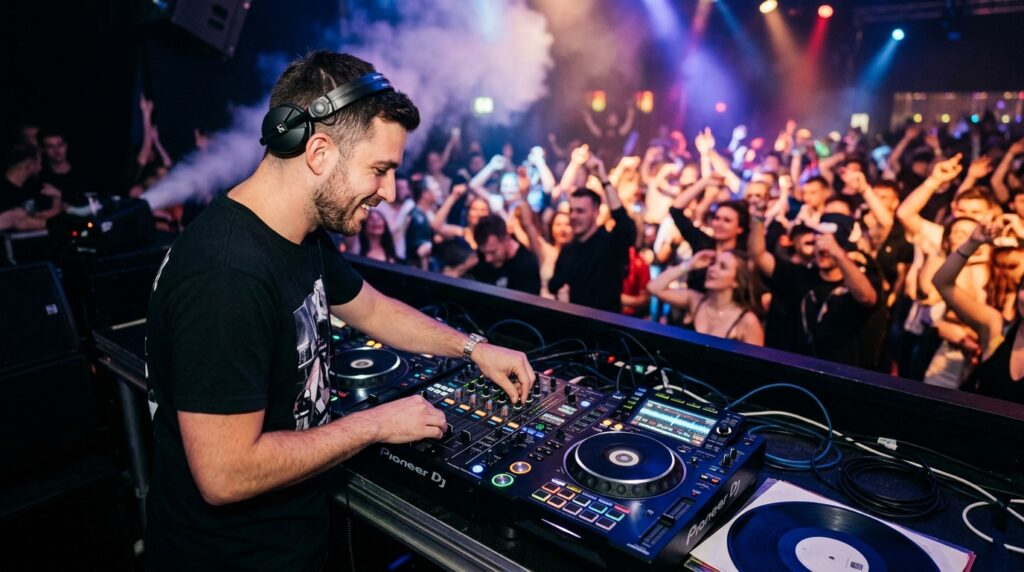
DJ or Band? Choosing the Right Music for Your Event
DJ or live band? The right music for every event – strengths, combinations and budget of both options compared.
Read post →
Booking a Venue: Checklist for the Binding Booking
Booking the venue: quote, reservation, contract and deposit – with this checklist you secure your preferred venue bindingly.
Read post →
Trade Fairs and Exhibitions: The Right Venue for Floor Space and Presentations
Finding a venue for trade fairs and exhibitions: halls, floor space, logistics and technology – how to present products and brands effectively.
Read post →